

































obfuscation-image-square

What is code obfuscation?

Code obfuscation is the process of transforming readable source code into a version that is difficult for humans and automated tools to understand while preserving its original functionality. It helps protect intellectual property, prevent reverse engineering, and defend applications against tampering and attacks.

app-security_6

Why Code Obfuscation Is Essential for Application Security

Without protection, compiled applications can be decompiled and analyzed to reveal:

  • Proprietary algorithms
  • Business logic
  • API keys and secrets
  • Licensing mechanisms
  • Security controls

Code obfuscation reduces these risks by transforming code into a structure that is extremely difficult to interpret or manipulate.

Benefits include:

  • Protection against reverse engineering
  • Prevention of IP theft
  • Reduced risk of tampering
  • Stronger mobile and desktop app security
  • Enhanced compliance posture
Secure-Your-App-with-These-Three-Code-Obfuscation-Techniques

How Code Obfuscation Works

Code obfuscation applies automated transformations that preserve functionality but distort readability and structure. A few common techniques include:

  1. Identifier Renaming

    Variables, classes, and methods are renamed to meaningless values.

  2. Control Flow Obfuscation

    Logical program flow is altered to make execution paths difficult to trace.

  3. String Encryption

    Sensitive strings are encrypted and decrypted at runtime.

  4. Dead Code Injection

    Non-functional instructions are added to confuse analysis tools.

  5. Arithmetic obfuscation

    The conversion of simple arithmetic and logical expressions into complex equivalents

  6. Code virtualization

    The transformation of method implementation into instructions for randomly generated virtual machines
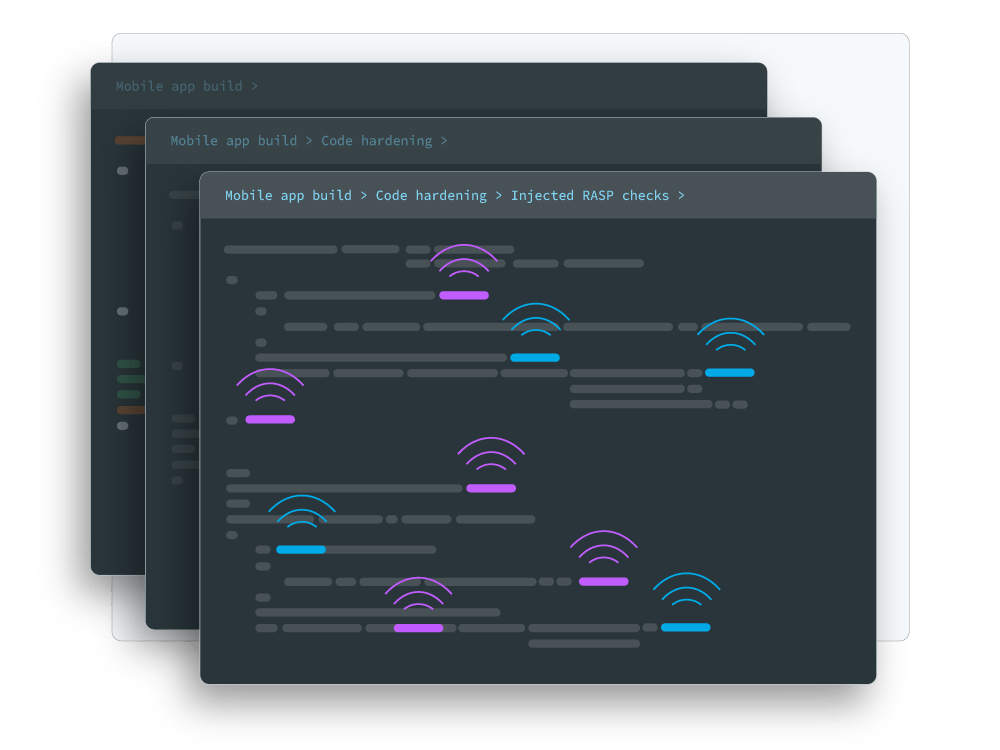
See how our code obfuscation solution works
1-best-in-class-technology

Key Capabilities

Our code obfuscation technology delivers enterprise-grade protection without sacrificing performance or stability.

Key capabilities:

  • Advanced multi-layer, polymorphic in nature obfuscation
  • Seamless integration into CI/CD pipelines
  • Cross-platform support
  • Continuous protection updates

Unlike basic obfuscators, our approach focuses on security effectiveness while maintaining application performance.

Why-Code-Obfuscation-Isn’t-Enough-to-Protect-Mobile-Apps-feature_1200x675

Mobile application obfuscation prevents hacking

When evaluating vendors such as Guardsquare, it’s important to consider depth of protection, scalability, and ongoing support.

We provide:

  • Proven application security expertise
  • High-performance obfuscation
  • Dedicated customer support
  • Continuous innovation
  • Enterprise scalability

Protecting your code is not a one-time task; it requires evolving defenses that keep pace with modern threats.

Talk to our security experts

Code obfuscation is a software protection technique that transforms readable source code into a version that is difficult to understand or reverse engineer while preserving its original functionality. It helps protect intellectual property and prevent tampering.

Organizations obfuscate code to prevent reverse engineering, protect proprietary algorithms, secure sensitive data, and reduce the risk of intellectual property theft. It is especially important for mobile and distributed applications.

No. Encryption protects data by converting it into unreadable ciphertext that can be decrypted with a key. Code obfuscation modifies the structure of software code to make it difficult to understand, but it does not rely on a decryption key to function.

Modern code obfuscation solutions are designed to minimize performance impact. While some techniques introduce slight overhead, advanced implementations optimize transformations to preserve application speed and stability.

Ready to see how code obfuscation can better secure your mobile applications?

Learn more in our blog