






Make your mobile app pentest-ready

Failed a pentest?

A failed pentest means delayed releases and regulatory friction

Penetration testing (pentesting) is a mandatory step for mobile apps in regulated industries like finance, telecom and healthcare

  • Avoid surfacing critical vulnerabilities late in the SDLC, which exponentially drives up cost and puts teams under tight deadline pressure.
  • Ensure readiness prior to a pentest and maximize compliance certification chances.
01-PENTEST-READINESS-L_GRID-FAILED-PENTEST_01
02-PENTEST-READINESS-R_GRID-REMEDIATION-STRATEGY-001

Resolve critical findings and meet resilience requirements

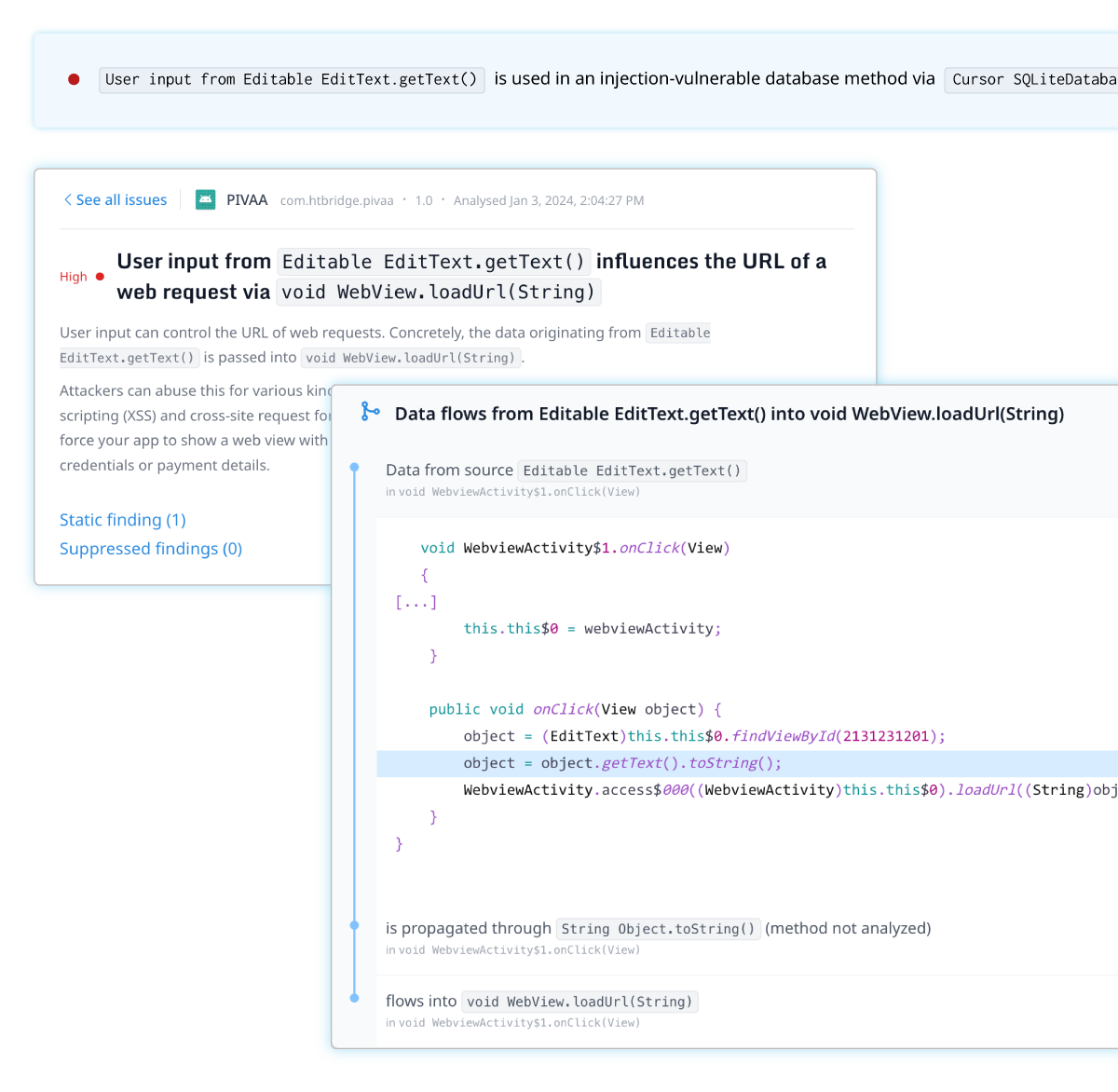
Use automated mobile app security testing (MAST) to uncover and resolve weaknesses in your code base.

  • Perform automated scans of your application code and third-party dependencies to identify vulnerabilities and insecure configurations.
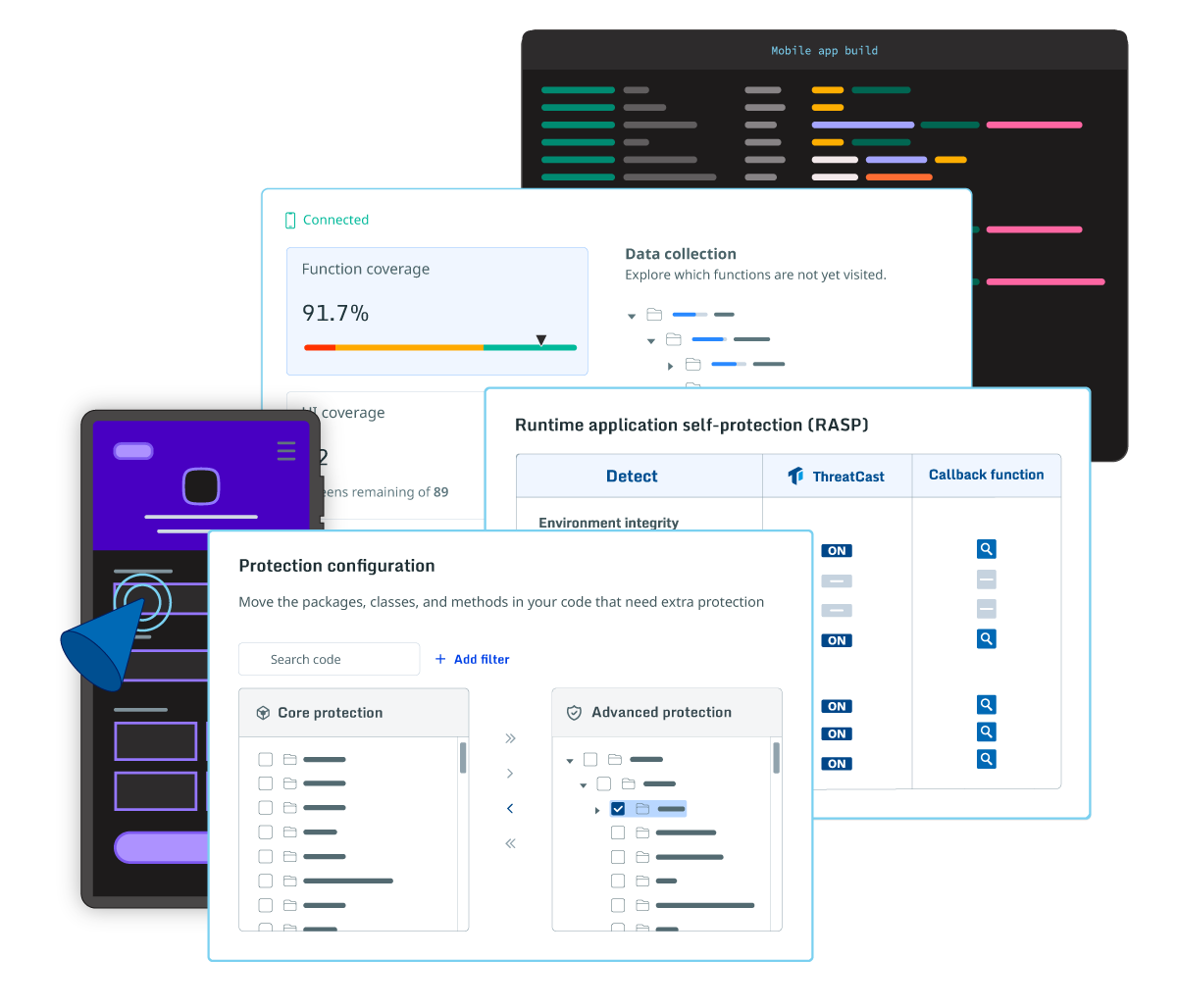
  • Apply multi-layered code obfuscation and Runtime Application Self-Protection (RASP) to ensure your mobile app cannot be reverse engineered or tampered with at runtime, directly addressing the resilience requirements of a pentest.
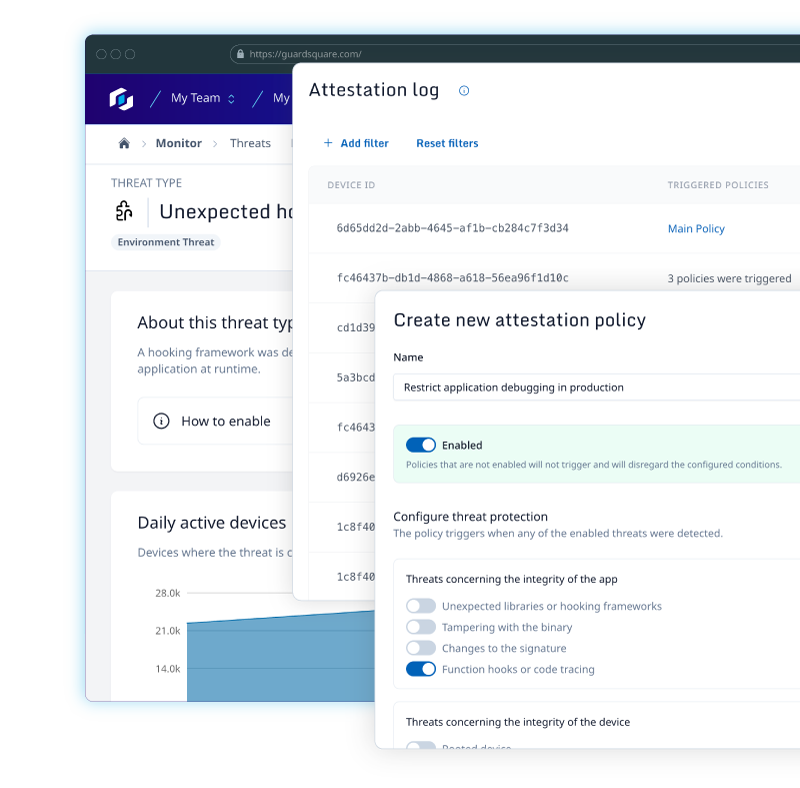
  • Protect your backend APIs from compromised clients with dedicated mobile API security (in the form of app attestation).
Achieve_Compliance-icon-300
Achieve compliance

Meet PCI-DSS, HIPAA, and PSD2 requirements with documented mobile app testing and multilayered protection before a pentest.

ROCKET-ICON-300
Avoid business disruption

Enter a pentest with the most critical OWASP security weaknesses already resolved and avoid delayed release schedules.

INSURED-ICON-300
Remain cyber-insured

Maintain policy eligibility and lower premiums by proving proactive security testing and remediation capabilities.

Build pentest readiness into your mobile app security program with Guardsquare

How Guardsquare prepares you

Explore more resources

Pentest readiness is the practice of integrating continuous mobile app security testing and code hardening into your development pipeline before a formal penetration test.

Instead of discovering vulnerabilities during the pentest, teams identify and fix them early, reducing the attack surface and documenting security practices for compliance.

AppSweep locates code-level vulnerabilities so developers can actively fix them. DexGuard (Android) and iXGuard (iOS) harden the application to withstand reverse engineering and runtime attacks. Together, they allow your team to remediate specific pentest findings while satisfying the mandatory resilience requirements needed to pass your audit.

Requirements vary by industry and region. For example, in financial services, PCI-DSS and PSD2 include provisions for security testing of applications handling payment data or providing financial services. In healthcare, HIPAA and HITECH require safeguards for electronic protected health information.

Depending on your industry, certain regulations explicitly require manual penetration testing by qualified security professionals. Furthermore, automated testing tools identify known vulnerabilities continuously, but only manual testing can uncover complex business-logic flaws and chained exploits.

No. Guardsquare does not offer penetration testing services. Guardsquare provides the tools and workflow that help your team prepare for a pentest, so that when an external pentester evaluates your app, they find a hardened and tested application.

Most customers have their initial protected build within a day, thanks to Guardsquare's guided workflow that tailors protection to your specific app instead of applying a generic template.