
It's the set of defenses that stop your app from being modified, cloned, or tampered with by attackers who want to bypass monetization, impersonate your brand, or steal user data.
Protect your business
A modded app doesn't just cost you a purchase. It severs the line between you and the person using your product or service. You lose the ability to communicate with them, protect them, or even know they're using your product.
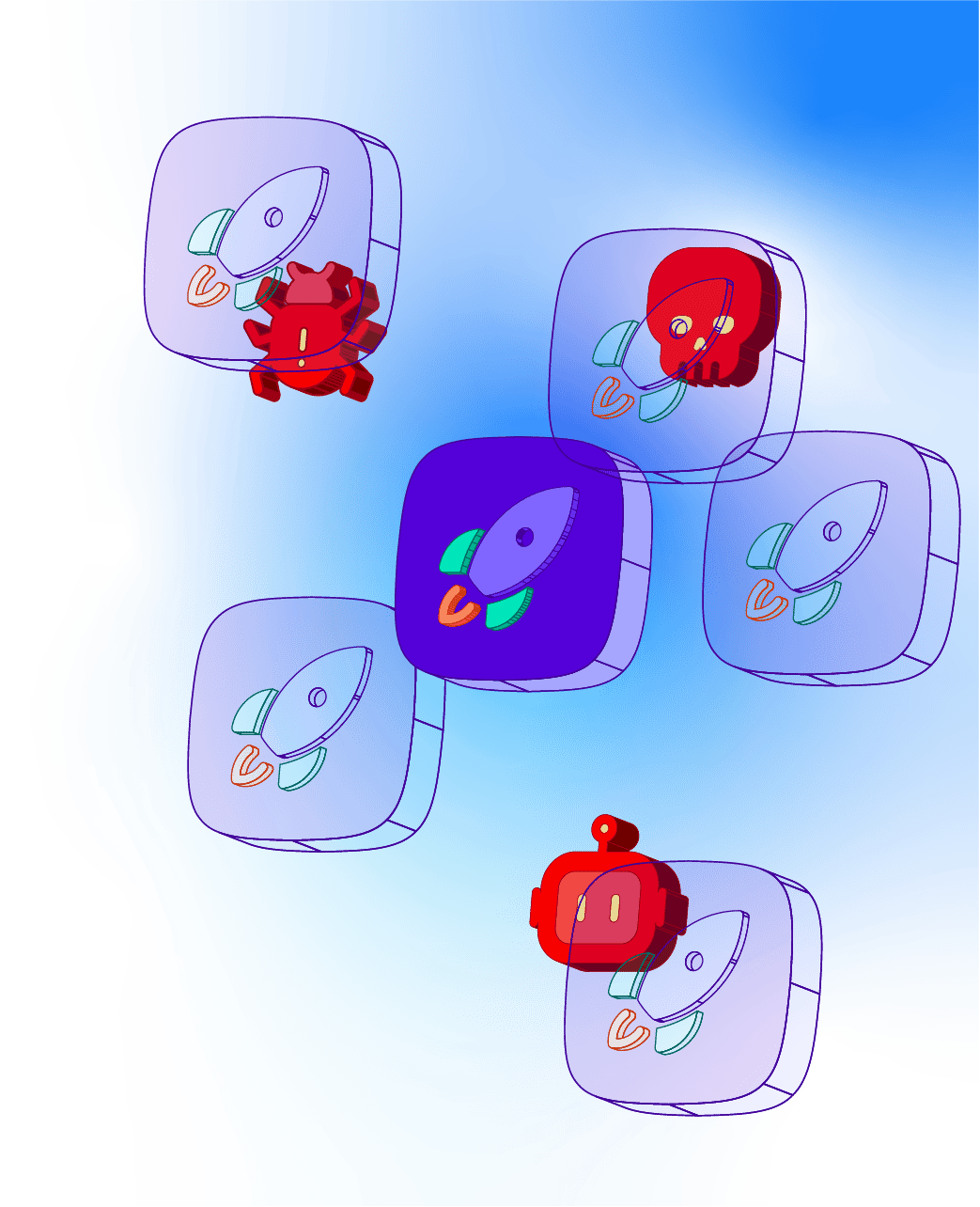
Detect tampered builds that bypass paywalls, remove ads, or unlock premium features, and cut off the revenue leak before it spreads.

Identify repackaged and cloned apps that impersonate your brand, steal user data, and put your reputation on the line.

Stop competitors from lifting your algorithms, models, and assets from your app's code and reusing them as their own.
Compliance frameworks like PCI MPoC and PSD2/PSD3 don't ask whether your app might be tampered with. They ask what you're doing about it. The gap between those two questions is where liability lives.
A modded app looks like a win for the user: no ads and every feature is unlocked. For you, it's a direct revenue hit and a broken link to your audience. Research on mobile piracy shows that for every illegal download, roughly two legitimate sales disappear with it. Specialized stores and tools exist purely to strip out your monetization, and once your audience moves to a modded build, you lose the ability to communicate with them. Detecting and blocking these builds isn't about punishing curious users. It's about protecting the revenue engine your app was created to power. Guardsquare’s code hardening obscures your monetization logic, while RASP checks instantly shut down modified environments.
DexGuard’s defenses against static and dynamic analysis reinforce one another, providing more robust Android app protection overall than any individual approach would offer. When a malicious user runs your app from a debugger or emulator to validate their static analysis, automated RASP checks kick in allowing you to take actions like end the user's session, crash the application and deploy other defensive actions. DexGuard obfuscates each of these checks, preventing an attacker from learning where and how the application is detecting integrity violations.
Cloning your app is faster and more convincing than building one from scratch. Attackers repackage the original code, keep it looking and functioning almost exactly like the legitimate app, and let your reputation earn the trust they haven’t. Because it looks and behaves like your genuine app, users trust it. They log in, enter sensitive data, and hand over the exact data attackers are targeting. Crude clones get caught quickly. Sophisticated ones, built from repackaged code, can run undetected for months, quietly damaging trust in the meantime.
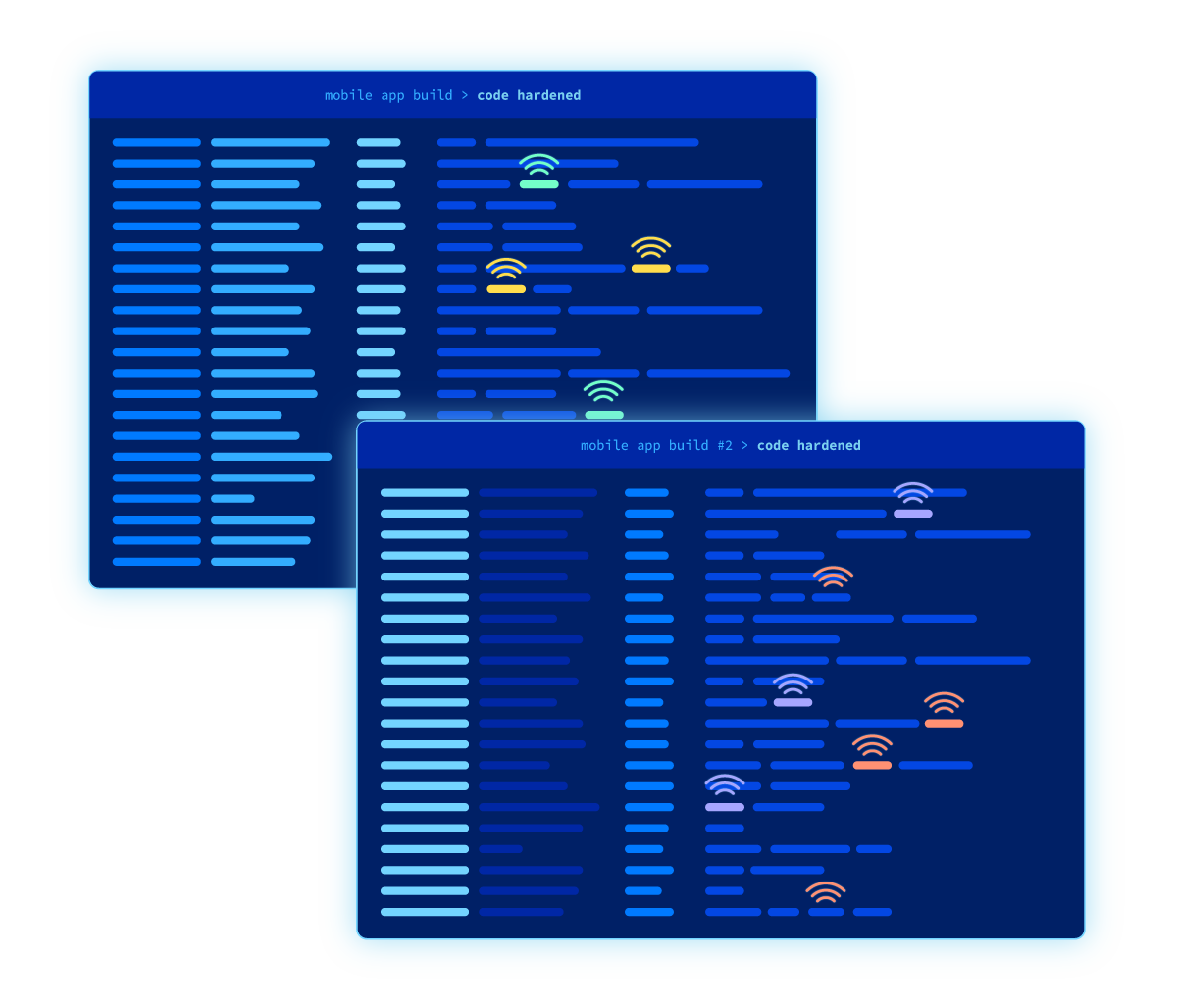
If each of your app’s builds apply the same defenses in the same locations, an attacker will easily decipher your app’s internal logic and will know where the most sensitive information lies. That’s why DexGuard hardens broad swathes of your app’s code and draws on a diverse library of integrity violation checks to prevent an attacker’s progress.
Because these code hardening and RASP techniques are applied polymorphically and automatically, no two builds feature the same protections. Thus, every build resets the clock on attackers, rendering their previous knowledge useless.
An attacker doesn't always need to alter your app. If they can reverse engineer how it interacts with your server, they can build their own client, script, or fake app that speaks the same language. From that point on, every check you built into the original app is irrelevant, because the original app was never involved. This is how cheaters bypass game logic, how modders unlock paid features for free, and how fake apps quietly extract data at scale. Protecting the endpoint means confirming that every request comes from your genuine, untampered app before you answer it.
Achieve the highest level of protection while ensuring app stability and performance through Guardsquare's instrumentation and profiling
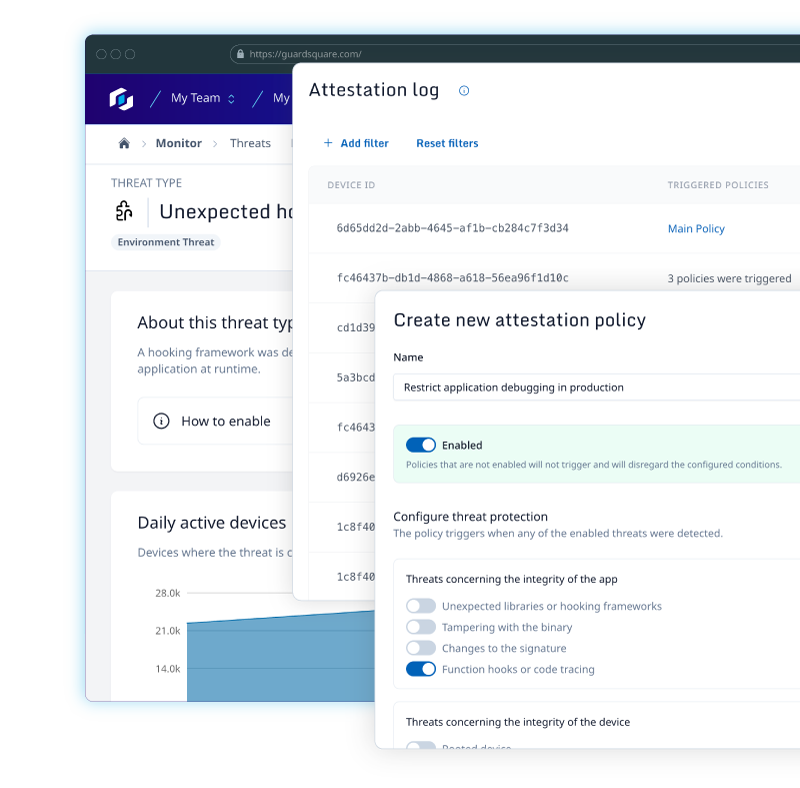
Experience easy implementation with a guided configuration that simplifies the entire workflow.
Get maximum mobile app protection with build history and protection reports that facilitate intuitive collaboration across security and dev teams through enhanced visibility and actionable insights.
Guardsquare’s complete security platform helps organizations address regulatory risks and compliance reporting requirements across all stages of the mobile app lifecycle.
Secure native Android and cross-platform apps and SDKs with DexGuard, offering multilayered, polymorphic obfuscation and built-in runtime application self-protection (RASP).
Secure native iOS and cross-platform apps and SDKs with iXGuard, offering multilayered, polymorphic obfuscation and built-in runtime application self-protection (RASP).
Secure your APIs at runtime. Protect your app with dynamic server-side policies that confirm in real-time the app accessing your APIs is genuine and stop API abuse like bots and automated attacks
Fraud and cloning don't announce themselves. Most teams find out only after a user reports it or the damage is already done.
Modded builds, clones, and unauthorized API calls run undetected until a user complaint, a chargeback, or a bad review exposes it.
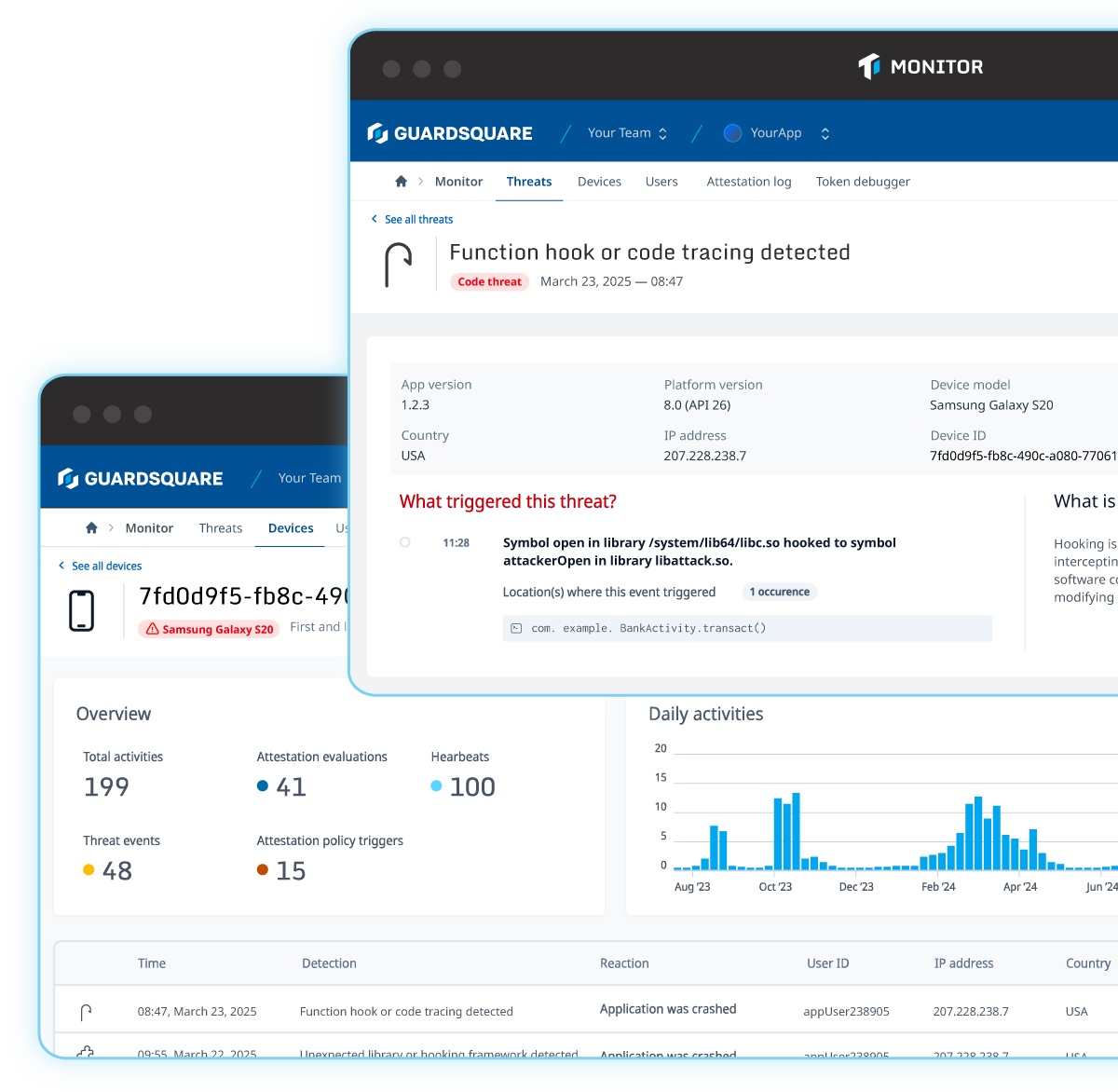
Every build is hardened against reverse engineering, every session is checked for tampering, and every unusual pattern reaches you before it reaches your users.
It's the set of defenses that stop your app from being modified, cloned, or tampered with by attackers who want to bypass monetization, impersonate your brand, or steal user data.
Modded apps remove ads and unlock paid features without payment. Beyond the direct loss, you also lose your connection to that audience, since they're no longer using your official build.
A mod changes your app to remove restrictions the user doesn't like. A clone recreates or repackages your app to impersonate it, usually to steal data rather than unlock features.
Yes. If someone reverse engineers how your app talks to your server, they can build a separate client or script that calls your API directly, bypassing any checks built into the original app.
Yes. PCI MPoC requires payment apps to resist reverse engineering, code injection, and tampering. PSD2 and PSD3 require strong customer authentication and protection against fraud at the transaction level. Code hardening protects the app binary itself, runtime checks catch tampering, hooking, or debugging as it happens, and app attestation confirms the request at your API actually came from a genuine, unmodified app. Together, they map directly to what these standards expect you to demonstrate.
Yes, as a foundational layer. While deepfake detection requires specialized capabilities, app-level protection (RASP) ensures the camera feed, biometric SDK, and device environment haven't been tampered with or fed a manipulated virtual input in the first place